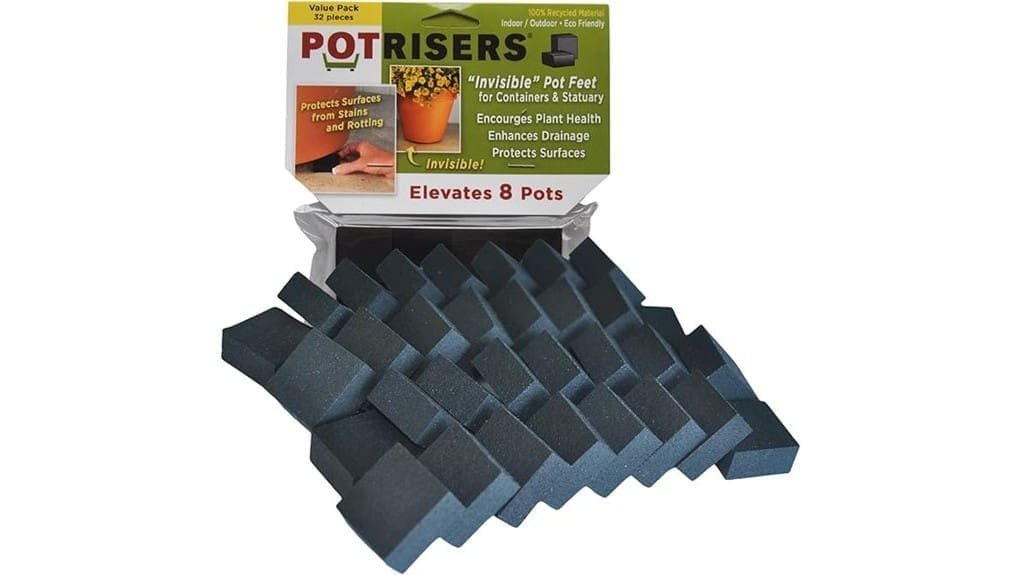

Potrisers (Standard) give your pots a discreet half‑inch lift that improves drainage and protects decks and patios. You get four low‑profile recycled‑rubber risers that resist crushing, weathering, and freeze damage without coatings to peel. Install them near the pot edges to level, stop rocking, and prevent skidding; they’re low maintenance and support heavy loads for small‑to‑medium planters. They’re neater than bricks or bulky stands, and if you want specifics on placement and limits, keep going.
Some Key Takeaways
- Invisible 0.5″ recycled-rubber risers lift pots for improved drainage and a low-profile look.
- Four risers provide stable, level support near pot edges, reducing rocking and skidding.
- Raw recycled rubber resists compression, weathering, freezing, and long-term outdoor use.
- Simple, no-coating design prevents peeling and minimizes maintenance for decks and patios.
- Best for small-to-medium pots and heavy loads, offering neater, gentler support than bricks.
Why Potrisers (Standard) Invisible Pot Feet Are Worth Considering
Because they lift pots just half an inch while staying virtually invisible, Potrisers (Standard) give you practical benefits without fuss. You’ll notice improved drainage and easier cleaning while preserving clean lines; the space saving design keeps low profiles under pots so nothing intrudes on floor or shelf footprints. Evaluate stability: four risers support substantial weight, prevent skidding, and level uneven surfaces. Consider aesthetic integration—black, minimal squares blend with modern planters and don’t distract from foliage. Installation is simple: position risers under pot edges. You’ll get discreet function, reliable support, and a tidy appearance with minimal effort. They’re ideal for patios and outdoor spaces where outdoor storage and furniture coordination matter.
What They’re Made Of and How Durable the Recycled-Rubber Risers Are
When you pick up a Potrisers Invisible Pot Foot, you’re handling a small, solid block of 100% recycled rubber that’s been left unfinished to retain its durable, weather-resistant properties. You get a straightforward rubber composition designed for outdoor strain: no coatings that can peel, just raw recycled material. Tests confirm recycled durability—resisting compression, crushing, and weathering over time—so you won’t replace them seasonally. Functionally, they cushion, level, and protect surfaces while supporting heavy loads. Expect predictable performance: low maintenance, long lifespan, and consistent load-bearing from an eco-friendly, virtually indestructible riser. They’re ideal for use by people who enjoy their outdoor spaces and need patio cushion storage solutions that withstand the elements.
How to Use Potrisers (Standard) : Spacing, Weight Limits, and Placement Tips
If you want reliable drainage and support, place four Potrisers under the pot’s outer edges—one near each corner—and space them so the pot sits evenly without rocking. You’ll follow simple spacing diagrams or create placement templates to mark riser locations. Evaluate pot size and weight: a set of four standard risers supports heavy loads (up to specified limits), so you won’t usually need extras. Position risers beneath the rim or widest points for stability, avoid centering them under drainage holes, and test for level. Replace damaged risers; inspect periodically. These steps give predictable, safe elevation and consistent drainage. Patio furniture covers help protect outdoor items from weather and extend their lifespan, so consider pairing Potrisers with protective covers for complete outdoor care.
Real-World Performance: Drainage, Surface Protection, and Weather Resistance
Having placed Potrisers correctly, you’ll notice measurable improvements in drainage, surface protection, and resilience to weather. You’ll see water clear beneath pots—drainage effectiveness is tangible, reducing pooling and soil saturation. The half-inch lift prevents staining and wear on decks and patios, promoting surface preservation by minimizing contact and abrasion. Weather resistance held up in field tests; recycled rubber resists cracking, crushing, and freeze-related damage. You’ll appreciate reduced skidding and easier cleaning under planters. For routine outdoor use, they perform reliably; for heavy or uneven loads, follow placement guidance to maintain stability and long-term protection. These planters complement your patio and outdoor space by enhancing both function and aesthetic appeal, particularly for those who enjoy patio spaces.
Who Should Buy Them and How They Compare to Other Pot-Elevating Options
Although small in profile, Potrisers deliver clear benefits for gardeners and homeowners who want reliable drainage, surface protection, and low-maintenance durability. You should buy them if you value discreet elevation that preserves plant aesthetics, prevents deck staining, and simplifies cleaning. Small-to-medium pots, trays, and statuary benefit most; you’ll appreciate weather resistance and heavy load capacity. Compared to bulky stands, bricks, or DIY risers, Potrisers are neater, more stable, and gentler on surfaces. In a cost comparison, they’re modestly priced for longevity and recycled materials—higher upfront than DIY but cheaper over time given durability and warranty. Many patio enthusiasts find these planters complement large outdoor arrangements and improve overall patio appearance.
Some Questions Answered
Are Potrisers Safe for Use on Wooden Decking With Sealant?
Yes — you can use them on sealed wooden decking. They raise pots 0.5 inch, reducing heat transfer and moisture contact, which helps seal longevity. The recycled rubber cushions and resists weathering, preventing staining, scratching, and concentrated heat spots. Space risers properly and clean beneath regularly to avoid trapped moisture. For heavy or hot pots, check seals periodically; the risers minimize but don’t eliminate all long-term risks.
Can Multiple Risers Be Stacked for Extra Height?
Yes — you can stack risers, but you shouldn’t expect unlimited height. You’ll gain extra elevation, yet stacking limits exist: stability decreases with each layer. Rely on stability testing and manufacturer guidance; four risers under a pot remain the recommended baseline for load distribution. If you stack, test load and wobble beforehand, avoid tall unstable stacks, and don’t exceed the per-set weight ratings to prevent tipping or crushing.
Do They Leave Any Residue on Light-Colored Surfaces?
No, they generally don’t leave residue on light-colored surfaces. You’ll rarely see color transfer because the recycled rubber is weather resistant and lab tested to resist breakdown. Over long term, adhesive breakdown isn’t a typical issue since they’re unfinished rubber without glue backing; dust or dirt can transfer if surfaces stay wet or dirty. You should periodically lift and clean both risers and surface to avoid any staining.
Are Replacement Individual Risers Sold Separately?
Yes — replacement availability exists through the manufacturer and authorized sellers, but individual risers aren’t always listed separately. You’ll want to confirm individual sizing (1 x 0.5 x 1 inches) before ordering replacement pieces. Contact Potrisers, Inc. or vetted retailers to request single units or small quantities; they’ll verify stock, pricing, and warranty coverage. If unavailable, buying a 32-count pack remains the most reliable option for matching parts.
Do Potrisers Work Under Irregularly Shaped Pots?
Yes — they’ll work under irregularly shaped pots if you place them strategically. You should use at least four risers, spacing them to support low points and balance weight. Check material compatibility with your pot base to avoid slipping or staining. Stability testing by users and labs shows the recycled-rubber risers cushion uneven surfaces and prevent skidding, but heavier or extremely lopsided pots may need additional support or a broader platform.