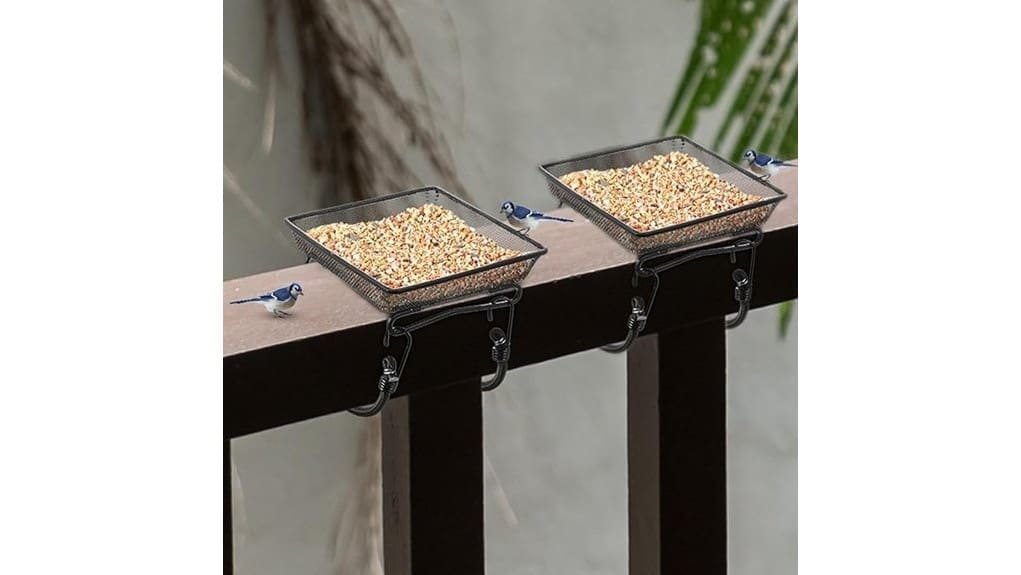

You’ll get two sturdy, rust-resistant metal trays with fine mesh sieves, curved steel anti-tip bars, and elastic ropes that cinch to railings for quick mounting; the iron construction feels solid and the mesh holds small grains without sagging. Expect easy setup, compact capacity, and simple upkeep, though ropes can stiffen from UV and coating may wear in harsh climates. It’s great for apartment birding or low-maintenance users—keep going to see mounting tips, alternatives, and upkeep advice.
Some Key Takeaways
- Two 7×7×2-inch metal trays with fine mesh sieve offer compact, stable feeding for small flocks on deck railings.
- Includes four elastic ropes and two curved steel anti-tip bars for secure mounting and added stability.
- Rust-resistant iron construction feels sturdy, though coating can wear in harsh climates over time.
- Small capacity and non-predator-proof design suit casual urban birdwatching but not heavy or squirrel-prone use.
- Low maintenance: rinse and dry trays, inspect/replace ropes seasonally to prevent UV-related stiffening.
What the 2 Pcs Deck Railing Bird Feeder Tray Includes and Specs
You’ll get two sturdy metal feeder trays and four elastic ropes—each tray measures 7 x 7 x 2 inches, giving you a compact platform that holds enough seed to attract groups of birds without taking up much deck space. You’ll find tray dimensions stamped in the specs, confirming capacity and fit for standard railings. Metal iron construction gives strength, while a rust resistance coating extends outdoor life. Elastic ropes stretch to secure trays to railings or walls. A fine mesh sieve keeps small grains contained and two curved steel bars stabilize against tipping, so placement’s straightforward and reliable. Perfect for creating a cozy patio haven, these trays help transform your deck into a wildlife-friendly space.
How the Metal Tray, Mesh Sieve, and Elastic Ropes Hold Up in Use
Put the tray up and you’ll quickly see how the materials perform: the iron construction feels solid underhand and the rust-resistant coating keeps weathering to a minimum, so the platform resists bending or flaking even after weeks outside. In durability testing you’ll note the mesh sieve holds fine grains without sagging, and the curved steel bars keep balance under small flocks. Elastic ropes stretch reliably and snap back, though prolonged UV exposure can stiffen them. For longevity, follow simple maintenance tips: rinse debris, dry thoroughly, inspect attachment methods for wear, and replace ropes seasonally to preserve safe, steady use. Many patio owners also use dedicated hummingbird-friendly feeders and other accessories to enhance outdoor spaces and attract more birds.
Real-World Setup: Mounting, Stability, and Placement Tips
Mount the tray so its elastic ropes are looped securely around a flat, horizontal surface—like a 2×4 deck rail or a masonry ledge—and cinched tight to remove slack; this keeps the platform level and minimizes sway when birds land. Position trays at a comfortable rail height for viewing and refilling, typically 36–48 inches, and check that ropes stretch evenly so the fine mesh sits flat. Balance seed placement toward the center to prevent tipping; use the curved steel bars as anchors. Test stability by applying downward pressure before filling. Re-check knots after storms and rotate locations to deter predators. Create a charming patio setup by pairing the trays with other bird bath and feeder products to enhance the outdoor space and attract more birds to your patio.
Who It’s Best For and Alternatives to Consider
After you’ve got the tray secured and tested for level and sway, think about who will get the most out of this setup. You’ll find it ideal if you’re an urban apartment dweller wanting compact, rail-mounted feeding without bulky stations. Elderly birdwatchers will appreciate low-maintenance metal trays, rust resistance, and straightforward hanging ropes that avoid ladder work. If you need more capacity or seed variety, consider larger platform feeders or hopper styles. For quieter, squirrel-proof options, try weight-sensitive feeders or cage-enclosed trays. If mobility and quick relocation matter, lightweight plastic trays with clip mounts offer easier handling than fixed metal platforms. This setup pairs well with other patio accessories designed for small outdoor spaces, like deck railing planters, to create a cohesive and functional balcony environment.
Final Verdict: Pros, Cons, and Buy-or-Skip Recommendation
While the Deck Railing Bird Feeder Tray won’t replace a full-size station, it delivers a compact, durable, and low-maintenance solution when you need a rail-mounted platform that actually holds up to regular use. You’ll appreciate sturdy metal construction, rust-resistant coating, and secure elastic ropes; fine mesh and curved bars keep seed and birds steady. Durability concerns are limited to long-term coating wear in harsh climates and rope UV aging. Pros: compact, affordable, easy to install, attracts groups. Cons: small capacity, not predator-proof. Purchase recommendation: buy if you want a simple, reliable rail feeder; skip if you need large or protected feeding. This makes it a great option for patio birding enthusiasts who want to enhance their backyard viewing experience.
Some Questions Answered
Are Replacement Elastic Ropes Available Separately?
Yes — you can often buy replacement cords or elastic loops separately, though availability depends on the seller. Check the original retailer or marketplace listing first; they may offer spare elastic loops or rope packs. If not, source generic elastic loops or replacement cords with similar stretch and corrosion-resistant fittings. Measure the original length and elasticity (1.5x stretch) so your replacements maintain balance and secure attachment for safe bird feeding.
Can the Trays Be Painted or Customized?
Yes — you can paint and customize the trays, but you’ll need proper surface prep. Since they’re metal with a rust-resistant finish, sand lightly to scuff the coating, clean off dust, then use a primer made for metal. Choose outdoor, rust-inhibiting paint and sealant to preserve durability and color options. Paint hooks and ropes separately or cover them. You’ll get a personalized look while keeping the tray functional.
Do the Trays Come With a Warranty?
Yes — the trays usually include a limited warranty; check the product listing for the exact warranty duration. You’ll want to document any defects with photos and purchase proof, then follow the seller’s claim process (contact support, submit evidence, request repair/replacement or refund). Keep your receipt and note when you first used the trays. If the seller’s terms aren’t clear, ask before buying to confirm coverage and any shipping costs for returns.
Are These Trays Squirrel-Proof From Chewing?
No, they aren’t fully squirrel-proof from chewing. You’ll find decent chewing resistance thanks to the metal iron construction and rust-resistant finish, but determined squirrels can gnaw metal edges or elastic ropes. Use additional squirrel deterrents—metal baffles, heavier-gauge attachments, or tougher cord—to improve longevity. Position trays away from easy jump points and check fastenings regularly; prevention and reinforcement will keep feeders usable and reduce chew damage.
How Easy Are the Trays to Clean?
They’re easy to clean: you’ll rinse and scrub them with a soft brush every 1–2 weeks as a cleaning frequency guideline, or more often in wet weather. Use mild dish soap; avoid harsh cleaners that can strip the rust-resistant finish. The mesh lets debris wash away, and the metal surface wipes down quickly. Remove elastic ropes first, rinse thoroughly, dry fully, and reattach to keep feeders sanitary and long-lasting.