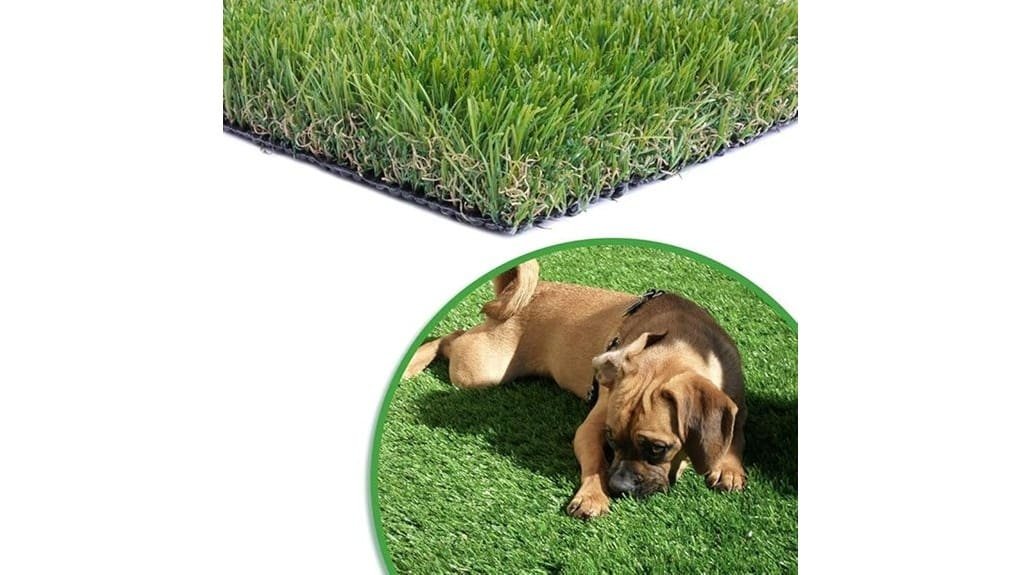
You’ll get a dense, low-profile 35mm artificial turf that looks natural without long, bulky blades—ideal for balconies, patios, pool surrounds, and pet zones. It’s made from UV-stable polyethylene/polypropylene yarns stitched into a nylon-backed face with double rubber backing for stability and drainage holes to prevent pooling. Short pile gives quick recovery and moderate thermal comfort; infill options add cushion. It’s low-maintenance and durable, and if you keep going you’ll find installation, care, and buy-or-skip details.
Some Key Takeaways
- 35mm pile balances realistic look and compact profile, ideal for small urban lawns, patios, and balconies.
- UV-stabilized polyethylene/polypropylene fibers resist fading and retain blade uprightness under sunlight and foot traffic.
- Tight stitch pattern with double rubber and nylon backing prevents delamination and ensures dimensional stability.
- Quick recovery short pile offers natural spring, moderate thermal retention, and easier trimming/seaming than long-pile turf.
- Low-maintenance: compacted base, seam-taped installation, monthly brushing, periodic infill top-ups, and prompt pet-waste cleanup.
What 35mm Artificial Turf Is and Who It’s Best For
Because it balances realism and practicality, 35mm artificial turf (about 1.38″) gives you a natural-looking, dense surface without the bulk of longer piles. You’ll get a low-profile, resilient mat that mimics grass texture while staying compact for tight spaces. Install it on urban balconies to add green visual depth without overwhelming railings or weight limits. Fit it into child playrooms for a cushioned, cleanable floor that drains and resists wear. You’ll appreciate simple cutting and edge sealing, UV stability, and pet-friendly durability. This turf suits multipurpose indoor/outdoor zones where realism, durability, and space economy matter. Consider pairing it with interlocking deck tiles for easy installation and flexible layout options.
Key Materials, Construction, and What 35mm Pile Feels Like
The 35mm pile combines UV-resistant polyethylene and polypropylene yarns over a double-layer rubber backing to deliver a resilient, low-profile surface that looks and bends like real grass. You’ll notice a tight stitch pattern anchored to a nylon backing that stabilizes blades and resists lateral shear. The dual rubber layers provide dimensional stability while preserving softness underfoot. Optional foam infill cushions impact, enhances blade separation, and aids moisture wicking from the backing to drainage holes. The short pile yields quick recovery and natural blade spring; it limits thermal retention compared with denser turfs, keeping surface temperatures moderate. This turf pairs exceptionally well with modular outdoor deck tiles made for patios and terraces, offering an easy-to-install, low-maintenance surface that complements outdoor deck tiles.
Real-World Performance: Durability, UV Protection, and Drainage
Having covered how the 35mm pile and double rubber backing deliver spring and stability, let’s look at how that construction performs over time under sunlight, foot traffic, and rain. You’ll notice consistent weather resistance from UV-stabilized polyethylene and polypropylene that curbs fading and fibre embrittlement. The double rubber backing sustains dimensional integrity under repetitive loads, resisting delamination and compaction. Drainage holes and the porous backing yield efficient drainage performance, shedding water rapidly to prevent pooling and root-like odors. Visually, fibers retain uprightness and color; functionally, the turf withstands heavy use with predictable longevity and minimal performance loss. Proper weatherproofing and the use of compatible patio sealers help protect surrounding surfaces and prolong the overall outdoor space performance.
Installation Steps and Low-Maintenance Care for Long Life
When you install this 35mm turf correctly, you’ll get a flat, stable surface that drains well and lasts for years. Lay out, trim to shape, compact a crushed stone base, add a 10–15mm sand layer, roll turf with seams tight, and seam tape with adhesive; secure edges with galvanized stakes. Use infill per specification for resilience and weight. For simple upkeep, brush fibers against growth direction monthly, remove debris, hose spills, and treat pet waste promptly. Do seasonal prep: inspect seams, top up infill, flush drainage, and address edge lifting before extreme weather to extend lifespan. Consider pairing your turf with patio pavers to create a cohesive, low-maintenance outdoor living area.
Value Check: Cost, Uses (Pets, Patios, Pools), and Buy-or-Skip Decision Criteria
Think of this turf as a mid-range, low-hassle surface that balances upfront cost against multi-purpose performance: at 35mm pile and a 10×25 ft size, expect a price reflective of UV-stable polyethylene/polypropylene construction with double rubber backing and drainage—you’ll pay more than basic indoor carpets but less than premium landscape systems. For budget analysis, compare per-square-foot cost, installation labor, and seasonal pricing swings. Uses include pet areas, patios, and pool surrounds; inspect drainage and pet safety features. Consider longevity, maintenance savings, and potential resale value—buy if you need durable, low-maintenance multi-use turf; skip if you want premium aesthetics. It pairs particularly well with outdoor storage solutions like stylish storage boxes to keep patio areas tidy and organized.
Some Questions Answered
Can It Be Cut to Fit Curved or Irregular Spaces?
Yes — you can cut it to fit curved or irregular spaces. You’ll use hand trimming for precise edge shaping and a utility knife with a sharp blade, following backing grid lines. For joins on longer runs, you’ll align edges, apply adhesive tape, and use heat seaming to fuse seams smoothly. You’ll trim excess, secure edges with stakes or adhesive, and brush fibers to blend joins so curves read natural and seamless.
Is Infill Required or Recommended for This Turf?
No, you typically don’t need infill for this 35mm pile height turf; its dense yarns and double rubber backing provide cushioning and stability. If you want extra weight, blade resilience, or improved drainage rate under heavy use (pets, high traffic), a light infill like silica sand can help. You’ll see better fiber stand-up and slight added shock absorption, but infill may marginally slow drainage and needs occasional top-ups.
How Does It Perform in Freezing Winter Climates?
It performs well in freezing winter climates: you’ll see strong cold resilience and minimal stiffness. The UV-resistant polyethylene and polypropylene hold shape, and the double rubber backing stays flexible, so footprints rebound. Ice build up can occur on the surface but drains through holes and usually melts without damaging fibers; you’ll avoid structural cracking. You should clear heavy ice/snow to prevent long-term compression and maintain peak appearance and drainage.
Can It Be Installed Over Concrete or Rooftop Decking?
Yes — you can install it over concrete or rooftop decking if you prep properly. You’ll lay a waterproof membrane first, then a breathable underlay to protect decking and prevent moisture trapping. Position the turf with drainage solutions aligned to existing drains or scuppers, secure edges, and seal seams. You’ll make certain runoff flows away, avoid ponding, and maintain rooftop integrity while preserving turf longevity and performance.
Is the Rubber Backing Recyclable or Eco-Friendly?
No — the rubber backing isn’t compostable; it’s designed for durability rather than biodegradability. You’ll want to check vendor specs for any recycled content used in the rubber layers. If they don’t provide documentation, ask for recycled content percentages and biodegradability testing reports (standards referenced, test labs, results). That lets you visually evaluate eco-claims and decide if recycling programs or alternative substrates suit your sustainability goals.