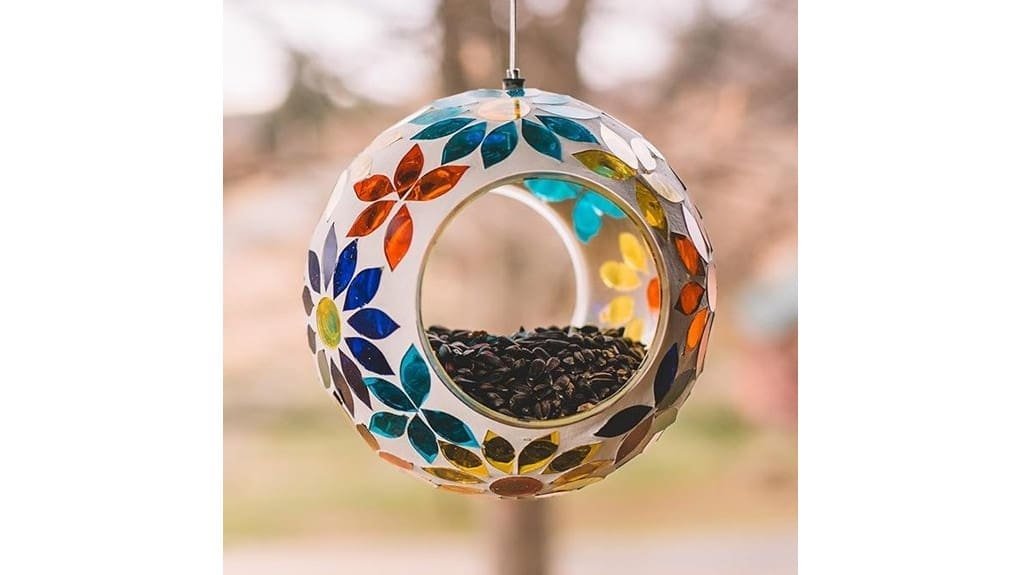

You’ll find the Backyard Expressions hanging glass feeder blends tempered-glass strength with a decorative mosaic finish, giving you a durable, attractive option for small–medium birds. Its fly-through, round design lets multiple wrens, chickadees, finches, or sparrows feed without crowding and cuts spillage. The sturdy frame and visible glass make monitoring easy, while gentle wipes prevent grout issues. It costs more than plastic but offers longevity; keep going to see placement, care, and value details.
Some Key Takeaways
- Tempered-glass construction offers durable, weather-resistant performance superior to standard glass but costs more than plastic or metal options.
- Multicolor mosaic finish enhances curb appeal and integrates with seasonal patio and garden décor.
- Fly-through, round design comfortably accommodates multiple small–medium birds with minimal spillage and easy perching.
- Generous capacity reduces refill frequency and keeps seed competition lower during peak visitation.
- Requires weekly cleaning, periodic grout checks, and sheltered winter storage to preserve finish and longevity.
What the Backyard Expressions Hanging Glass Bird Feeder Is and Who It’s For
While it hangs like a decorative ornament, the Backyard Expressions Hanging Glass Bird Feeder is a tempered-glass, fly-through feeder built for outdoor use and long-term durability. You’ll find it suits observers who want reliable, low-maintenance feeding: generous capacity serves multiple small–medium species, and the round shape facilitates natural perching. You’ll notice the multicolor mosaic influences color psychology, subtly drawing attention without startling birds, and it integrates with seasonal décor on patios and gardens. You’ll use it for casual birdwatching, attracting variety while keeping upkeep simple. It’s aimed at homeowners who value aesthetics, function, and consistent backyard wildlife activity. It also complements other patio bird-care products like bird baths to create a welcoming habitat for a wider range of species.
Build, Materials, and Mosaic Finish: Durability and Aesthetics
Constructed from tempered glass with a sturdy hanging frame, this feeder feels solid and built to last—resistant to everyday impacts and outdoor exposure. You’ll notice tempered durability in how the glass withstands wind and occasional knocks better than standard glass. The frame’s welds and hanging hardware show no play, so you won’t worry about sagging or sudden failure. The multicolor mosaic finish adds curb appeal without compromising function; tiles are well-adhered and edges are smoothed. For mosaic maintenance, you’ll need periodic gentle wiping and grout checks to prevent buildup and moisture ingress. Overall, construction balances form and function effectively. Wall-mounted water features can similarly enhance patio ambiance with soothing water sounds and visual appeal wall-mounted water fountains.
How It Performs for Small–Medium Backyard Birds (Capacity, Feeding Access, and Species Attracted)
You’ll find this feeder comfortably serves small–medium backyard birds, offering a generous reservoir and unobstructed fly-through access that lets multiple birds feed without crowding. You’ll observe wrens, chickadees, finches, and sparrows using the round opening; the capacity reduces refill frequency and lowers seed competition during peak visits. Tempered glass walls keep seed visible so you can monitor levels and behavior. The open design gives quick perch-to-feed shifts, which smaller species favor, and minimizes spillage. Its hanging silhouette also aids predators deterrence by keeping birds off the ground, improving safety while they feed. This feeder complements any outdoor space and pairs well with other patio bird-feeding accessories like bird feeders.
Installation, Placement, and Care: Hanging, Cleaning, and Longevity Tips
Start by hanging the feeder where birds feel safe and you can reach it easily for maintenance; a sheltered spot 5–10 feet from cover (shrubs or trees) offers quick escape routes for small birds but keeps predators at bay. Use sturdy mounting hardware rated for outdoor use and hang at eye level so you monitor activity and deter squirrels. Clean weekly with mild soap and hot water, rinse thoroughly, and dry to prevent mold. Inspect glass and fittings for chips or corrosion; replace damaged mounting hardware promptly. For winter, consider seasonal storage to protect the mosaic finish and extend feeder longevity. Consider adding multiple feeders spaced apart to reduce competition and increase patio enjoyment.
Value Verdict and Buying Considerations: Price, Alternatives, and Final Recommendation
Having kept the feeder clean and safely mounted, weigh whether its tempered-glass build and mosaic finish justify the price compared with plastic or metal options. You’ll notice glass looks premium, resists warping, and lasts if cared for, but costs more upfront. Use a price comparison to balance aesthetics and longevity against cheaper, lightweight alternatives. Consider capacity and bird attraction—this model feeds more small–medium species at once. Check warranty details for breakage and weather claims; a longer warranty offsets higher cost. Recommendation: buy if you value appearance and durability; choose plastic/metal if budget or impact resistance drives your decision. The product fits nicely into patio-focused decor and complements other outdoor pieces like wind chimes.
Some Questions Answered
Does It Deter Squirrels or Larger Wildlife From Feeding?
No, it won’t reliably deter squirrels or larger wildlife from feeding. You’ll find the tempered glass, hanging fly-through design and round shape favor small–medium birds, improving wildlife compatibility, but squirrels can still access hanging feeders unless you add baffles or place it on a long, thin cord away from launch points. Observationally, the mosaic finish and sturdiness don’t stop determined larger animals; active squirrel deterrence requires additional hardware or placement strategies.
Can It Withstand Extreme Winter Freeze-Thaw Cycles?
You probably shouldn’t expect perfect resilience; tempered glass handles cold better than annealed glass, but repeated thermal expansion from freeze-thaw cycles can cause stress. Ice forming in crevices or on feed surfaces risks ice damage and hairline cracks over time. Observationally, the sturdy design helps, yet you’ll reduce risk by bringing the feeder indoors during extreme freezes and avoiding trapped water that can expand and fracture the glass.
Is Replacement Glass Available if It Breaks?
Yes — replacement availability is limited but possible through the manufacturer or authorized retailers. You’ll need to check warranty coverage first; if the breakage falls under a defect, they’ll often provide a replacement or part. For accidental damage you’ll likely pay for a new glass piece. Document the damage, keep purchase proof, and contact customer service promptly to confirm options and any fees before ordering a replacement.
Will Hummingbirds Use This Feeder for Nectar?
Unlikely — hummingbirds prefer nectar feeders designed for their bill and feeding posture, so hummingbird attraction will be limited. The round, fly-through glass is built for perching small–medium birds, not for hovering feeders. Nectar suitability is low because ports and perch arrangements don’t accommodate hummingbird feeding behavior. You’ll attract various songbirds, but if you want hummingbirds, use a specialized nectar feeder with appropriate ports, bright colors, and frequent cleaning.
Does the Mosaic Glass Fade in Direct Sunlight?
Yes — the mosaic glass resists fading for good color longevity when it has a quality UV coating, but prolonged intense sun will still cause gradual change. You’ll notice colors stay vivid longer on feeders with tempered glass and a proper UV finish. For best results, hang it where it gets morning sun and afternoon shade, clean gently, and inspect the coating periodically to preserve appearance and function.